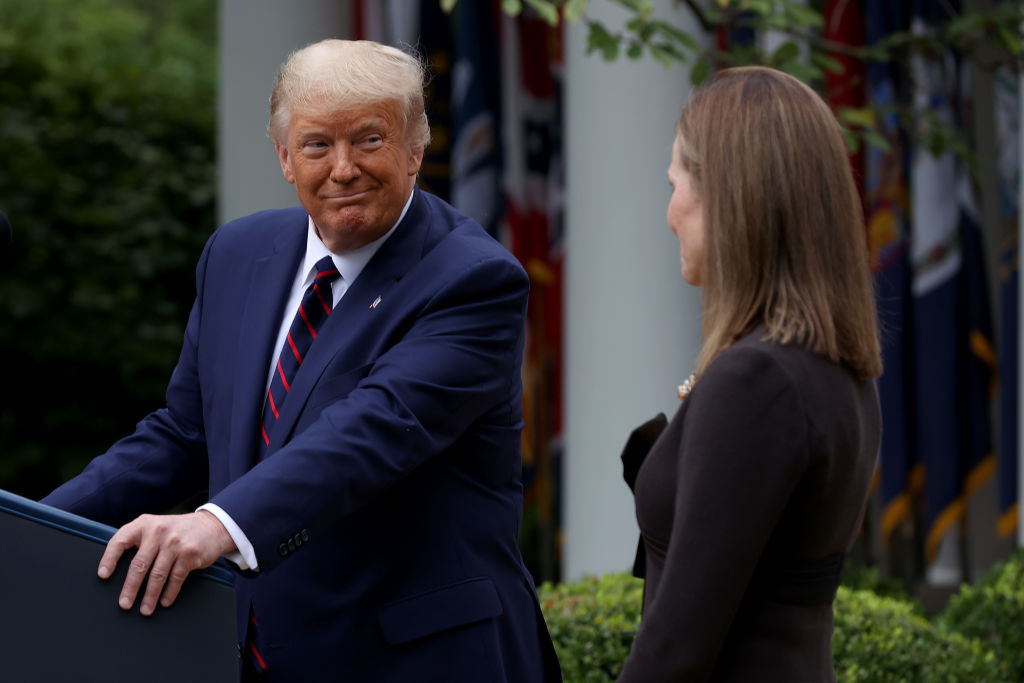
President Trump has directly reminded Supreme Court Justices Amy Coney Barrett and Neil Gorsuch that their appointments depend on his goodwill, explicitly stating he can remove them from the bench. The demand for loyalty from two justices he appointed represents an unprecedented pressure campaign on the judiciary.
Trump's comments target the institutional independence of the Supreme Court. Both Barrett and Gorsuch have issued decisions that departed from Trump's preferred outcomes on key cases. By publicly invoking his role in their appointments, Trump signals expectations of alignment with his political agenda rather than neutral judicial reasoning.
The practical implications extend beyond these two justices. Trump's language establishes a template for executive pressure on the judiciary during his tenure. While presidents have historically praised or criticized judicial decisions, explicit threats tied to appointment power cross into territory that undermines the separation of powers doctrine. The Constitution grants presidents appointment authority, but it also provides life tenure precisely to insulate judges from this type of coercion.
Gorsuch and Barrett occupy vulnerable political positions. Both received high-profile confirmations through Republican-controlled Senates, and both have disappointed conservative constituencies on some rulings. Trump's reminders exploit this vulnerability by reinforcing their dependence on continued executive and Republican support for their institutional legitimacy and reputation.
The statement also telegraphs potential future Supreme Court vacancies. Should another justice retire or pass, Trump has made clear his expectation that replacement candidates will demonstrate unquestionable loyalty before confirmation. This calculus affects the judicial vetting process and influences which candidates willing to accept such implicit conditions will advance through nomination.
For the Court itself, Trump's comments accelerate the erosion of its perceived independence. Public confidence in the judiciary depends partly on the appearance that justices decide cases based on law rather than political pressure. These statements collapse that appearance entirely.
The consequences ripple through the entire federal court system. District and appellate judges appointed by Trump