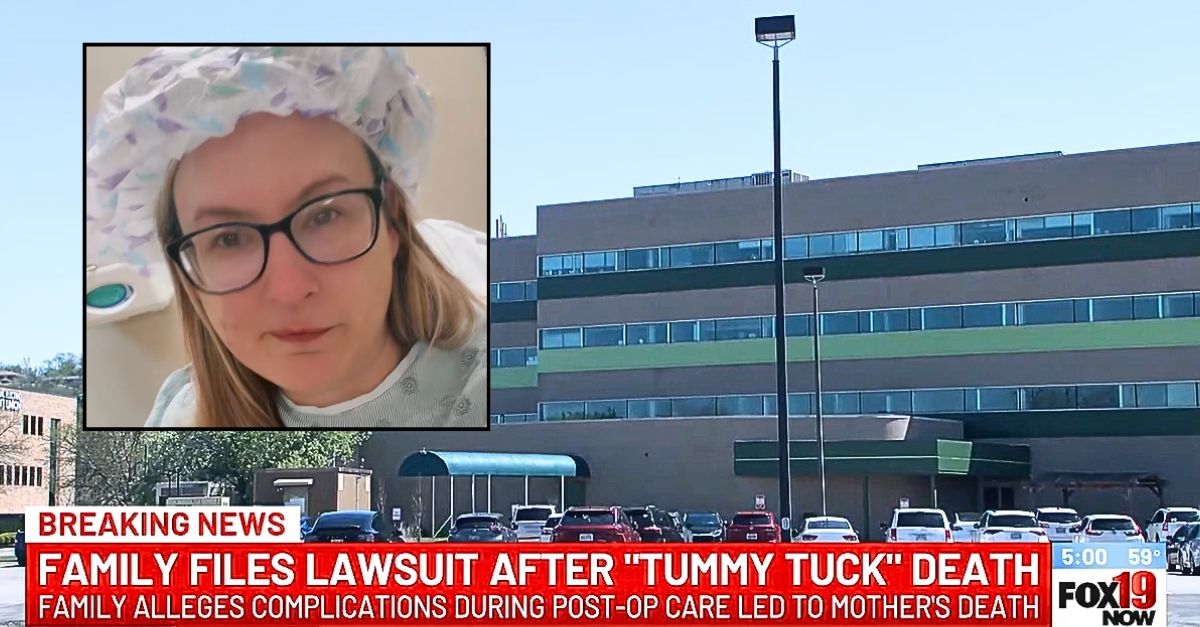
An Ohio mother died during cosmetic surgery after medical staff administered excessive opioids at a dangerously rapid rate, according to a pending lawsuit. The woman had been documenting her "mommy makeover," including abdominoplasty, on TikTok before the fatal procedure.
The lawsuit names surgery staff members who allegedly pumped powerful opioids into the patient too quickly during her tummy tuck operation. Court filings characterize the opioid administration as "excessive" and directly link the rapid dosing to her death.
This case highlights systemic failures in anesthesia protocols at cosmetic surgery facilities. Medical staff members bear strict liability for properly calibrating opioid doses based on patient weight, medical history, and procedure duration. The rapid administration of opioids creates respiratory depression and can cause fatal overdose, particularly when combined with anesthetic agents used during surgery.
Cosmetic surgery patients face elevated risks compared to hospital-based procedures. Many cosmetic surgery centers operate with minimal regulatory oversight. Unlike accredited surgical hospitals, outpatient cosmetic facilities often employ anesthesiologists or nurse anesthetists with varying credentials and experience levels. Staff may lack proper protocols for opioid administration or fail to monitor vital signs adequately.
The plaintiff's estate likely pursues claims under medical malpractice and wrongful death statutes. Ohio law permits recovery for damages including medical expenses, lost wages, pain and suffering, and punitive damages when gross negligence or intentional misconduct is demonstrated. The "excessive" opioid claim suggests potential gross negligence by the surgical team.
This lawsuit carries implications beyond the individual family. It exposes dangers in the largely unregulated cosmetic surgery industry where profit incentives can override safety protocols. The social media documentation adds a secondary concern: facilities marketing procedures to online audiences while maintaining substandard safety standards.
The case reinforces that cosmetic procedures carry