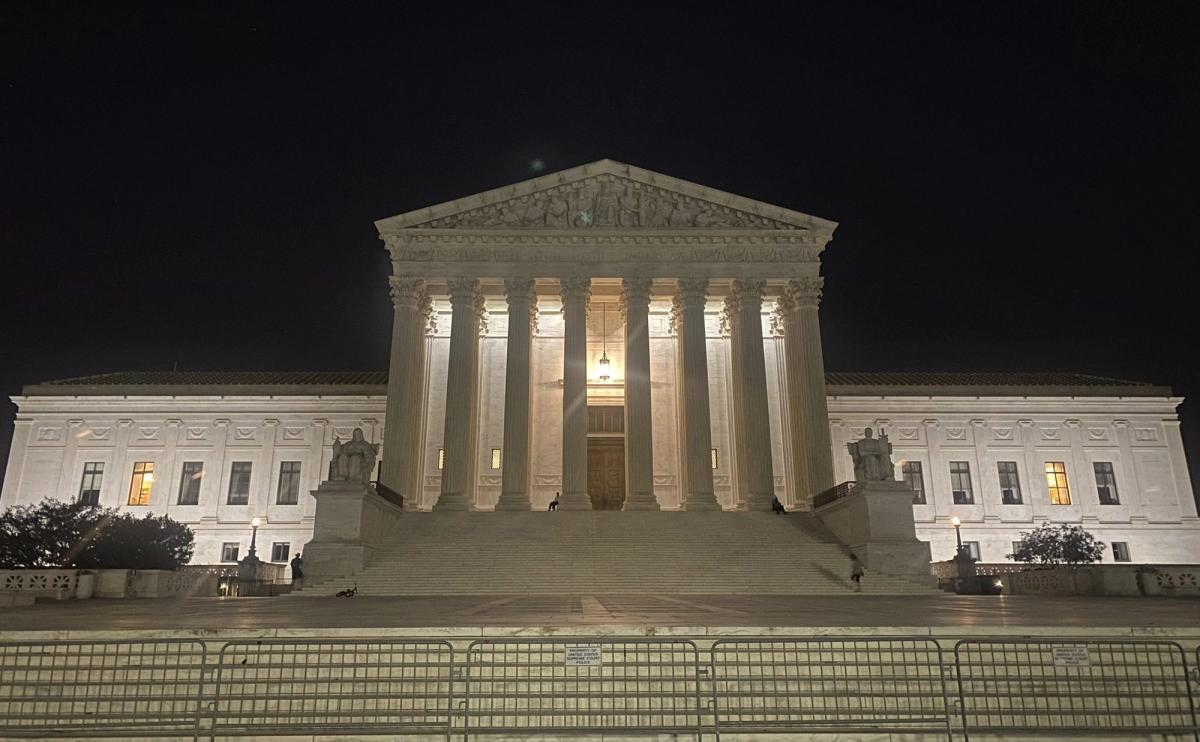
# Supreme Court Faces Challenge to Nitrogen Gas Executions
The Supreme Court confronts a novel constitutional question about whether execution by nitrogen gas violates the Eighth Amendment's prohibition on cruel and unusual punishment.
Nitrogen hypoxia executions work by forcing inmates to breathe pure nitrogen, causing oxygen deprivation and unconsciousness before death. Three states—Oklahoma, Alabama, and Mississippi—have adopted or considered the method. Oklahoma executed Kenneth Eugene Smith using nitrogen gas in January 2024, marking the first such execution in U.S. history.
Death row inmates challenge the procedure as untested and potentially agonizing. They argue the method fails to ensure rapid unconsciousness and that states have not adequately studied whether inmates suffer before dying. The petitioners contend this violates the Eighth Amendment standard requiring executions to minimize unnecessary pain.
The state defendants counter that nitrogen gas represents a humane alternative to lethal injection, which faces growing scrutiny over administration botches and vein access problems. They emphasize that no evidence proves nitrogen executions cause conscious suffering. States also invoke longstanding deference to execution methods when states provide legitimate penological reasons for choosing them.
The Court's decision will determine whether it applies heightened scrutiny to novel execution methods or maintains its historical hands-off approach to capital punishment procedures. Prior precedent gives states considerable latitude in selecting execution methods, but the absence of scientific data on human nitrogen executions creates uncertainty.
A ruling against nitrogen gas would not immediately halt executions but would require states to defend the method's safety with empirical evidence. A ruling for states would likely shield nitrogen hypoxia from constitutional challenge and potentially encourage adoption by other jurisdictions seeking alternatives to lethal injection.
The case reflects broader death penalty jurisprudence tensions between inmate rights and state authority over criminal punishment. The justices have shown deep divisions on capital punishment issues, making the outcome unpredict