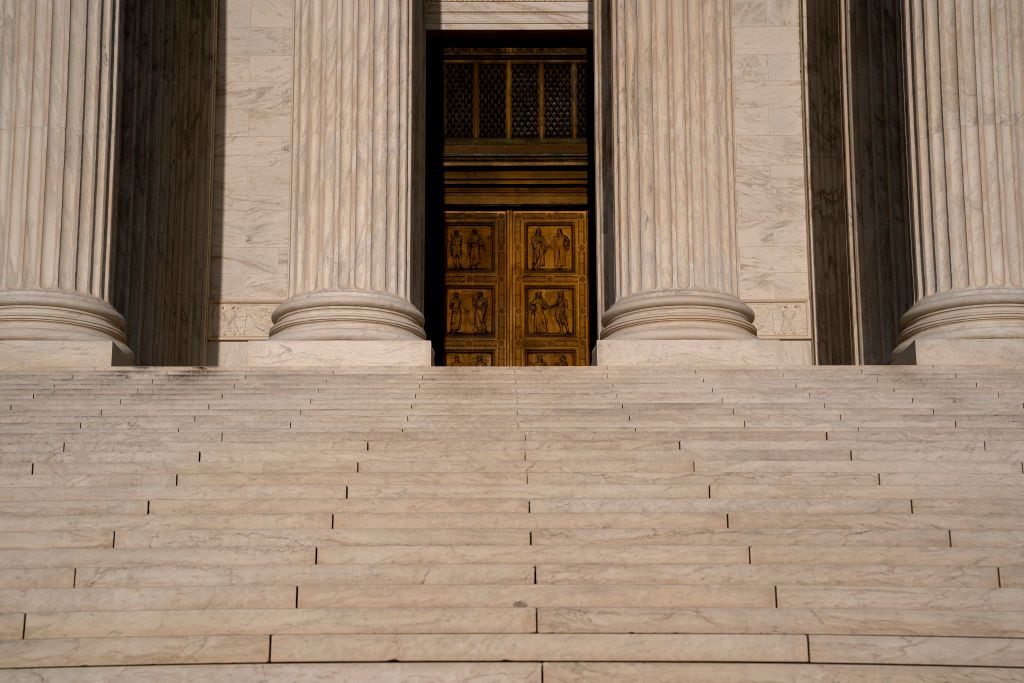
The Supreme Court signaled on Tuesday it will restrict when American courts can hear lawsuits over violations of international law. The justices posed questions during oral arguments that suggested skepticism toward broad interpretations of the Alien Tort Statute, the 1789 law that permits federal courts to entertain civil cases involving violations of international norms and laws of nations.
The case examines the scope of federal jurisdiction under the Alien Tort Statute, which has served as a vehicle for foreign nationals to sue in U.S. courts for human rights abuses, torture, war crimes, and piracy committed abroad. Courts have expanded the statute's application in recent decades, allowing plaintiffs to bring claims for violations of customary international law without explicit Congressional authorization.
The justices appeared concerned about extraterritorial reach. Chief Justice John Roberts and other conservative-leaning justices questioned whether Congress intended the statute to create such broad liability for conduct occurring outside U.S. territory. They also raised concerns about potential diplomatic complications from allowing foreign plaintiffs to litigate international disputes in American courts.
A narrower ruling would limit which violations qualify as actionable under the statute and potentially restrict which defendants can face liability. The practical effect would reduce access to U.S. courts for human rights victims seeking remedies for atrocities committed abroad.
The decision carries stakes for international human rights advocacy. Organizations representing victims of torture, genocide, and war crimes have relied on the Alien Tort Statute to pursue justice when domestic courts prove inaccessible or corrupt. A restrictive holding would force victims to pursue claims in foreign jurisdictions with uncertain legal systems or limited enforcement mechanisms.
Business interests also benefit from a narrower interpretation. Companies accused of complicity in human rights abuses abroad would face reduced litigation exposure in U.S. courts. Multinational corporations involved in extractive industries, manufacturing, or security operations in developing nations expressed concern