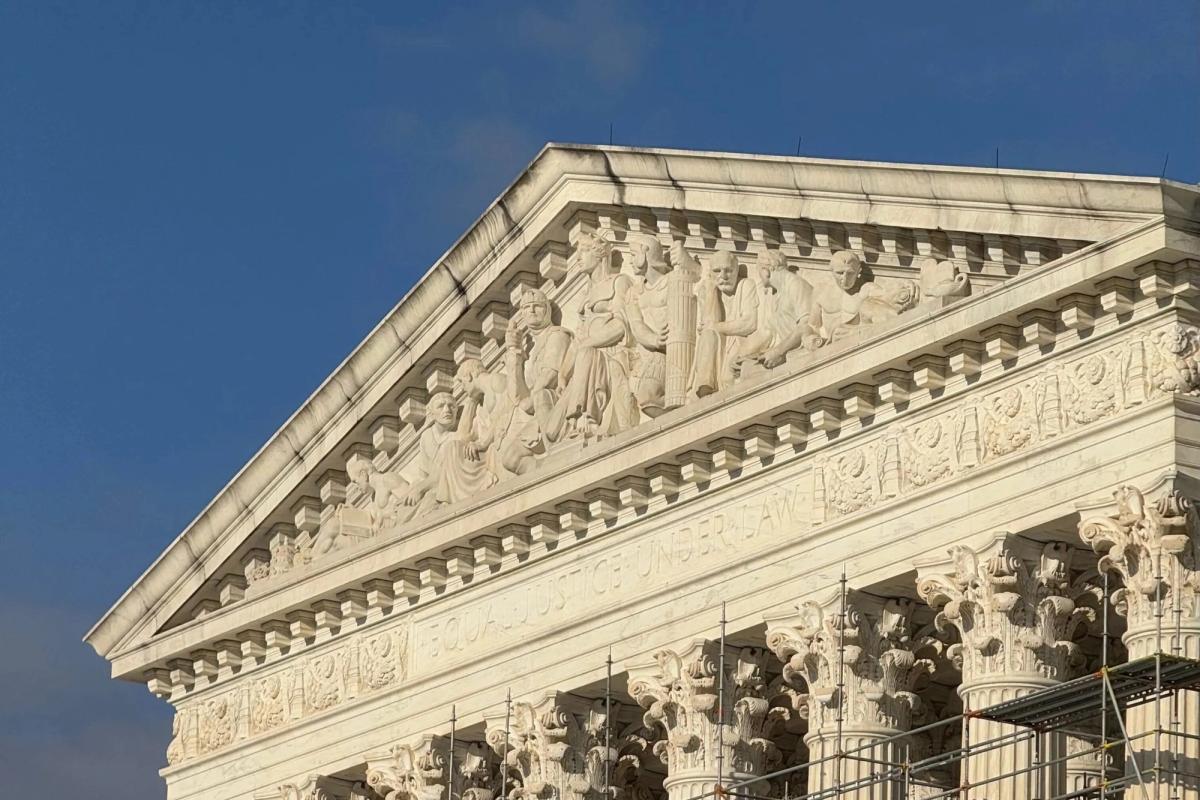
The Supreme Court finalized a ruling on the Voting Rights Act while simultaneously issuing a temporary order that restores mail access to mifepristone, the abortion pill, pending further litigation. The decision preserves voting protections under a key provision of the 1965 Voting Rights Act, marking a victory for civil rights advocates who challenged recent restrictions on federal oversight of election procedures.
The mifepristone order represents the Court's response to a lower court decision that had blocked FDA approval of mail-based distribution for the drug. The temporary restoration allows patients to continue receiving the medication by mail while the case proceeds through the judicial system. This interim ruling does not resolve the underlying dispute but prevents an immediate disruption to abortion access pending a final decision on the merits.
The rulings arrive as Justice Clarence Thomas approaches a historic milestone. Thomas will become the second-longest-serving justice in Supreme Court history by week's end, surpassing the tenure of Justice William O. Douglas and trailing only Justice John Paul Stevens. His extended tenure reflects nearly four decades on the bench since his 1991 appointment.
These orders underscore the Court's current role as arbiter of contentious cultural and political issues. The Voting Rights Act decision reflects ongoing tension over federal election regulation and the scope of congressional authority under the Fifteenth Amendment. The mifepristone ruling highlights persistent legal battles over reproductive access following the Court's 2022 decision in Dobbs v. Jackson Women's Health Organization, which eliminated the constitutional right to abortion and returned regulation to individual states.
Both matters remain pending before the full Court for substantive resolution. The temporary nature of the abortion pill order indicates the justices preserved the status quo without ruling on whether states may restrict medication abortion access. Similarly, the Voting Rights Act decision leaves open questions about the provision's future scope.
THE TAKEAWAY: The Supreme Court stabilized two volatile legal