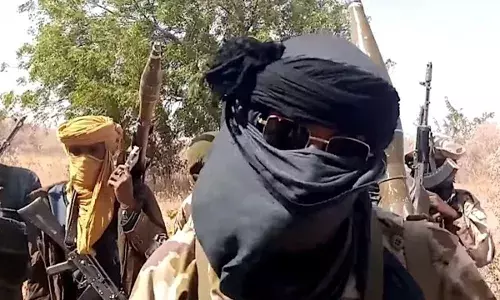
Armed bandits killed at least 18 people in Bunkasau village, Bukkuyum Local Government Area of Zamfara State, Nigeria. More than 80 assailants on motorcycles attacked the community around 9 p.m. on Friday, opening fire on residents indiscriminately.
Zamfara State Governor Bello Matawalle mourned the victims and acknowledged the attack. The incident reflects the ongoing security crisis in Nigeria's northwest region, where bandit groups operate across multiple states with limited law enforcement capacity.
The attack raises urgent questions about state responsibility for protecting citizens and enforcing public order. Under Nigeria's 1999 Constitution, state governors hold executive authority for internal security within their jurisdictions, working with federal security agencies including the Nigerian Police Force and military units. When armed groups conduct mass casualties with apparent impunity, courts may examine whether government failed its constitutional duty to maintain public safety.
This incident occurs amid broader litigation risks. Families of victims may pursue civil claims against the state for negligence or failure to provide adequate protection. Human rights organizations frequently challenge governments through domestic courts and international bodies, including the African Commission on Human and Peoples' Rights, for systematic failures to prevent mass atrocities by non-state actors.
Nigeria's Criminal Code addresses banditry, kidnapping, and armed robbery. State authorities face pressure to prosecute perpetrators, though apprehension and conviction rates remain low in remote areas. The frequency of such attacks suggests bandits operate with operational knowledge of community vulnerabilities and limited police presence.
For businesses and residents in Zamfara and neighboring states, these incidents create liability and insurance considerations. Companies operating in the region must assess security protocols and duty-of-care obligations to employees. Investors face reputational and legal exposure if their operations or supply chains operate in zones where state security failures enable mass casualties.
THE TAKE