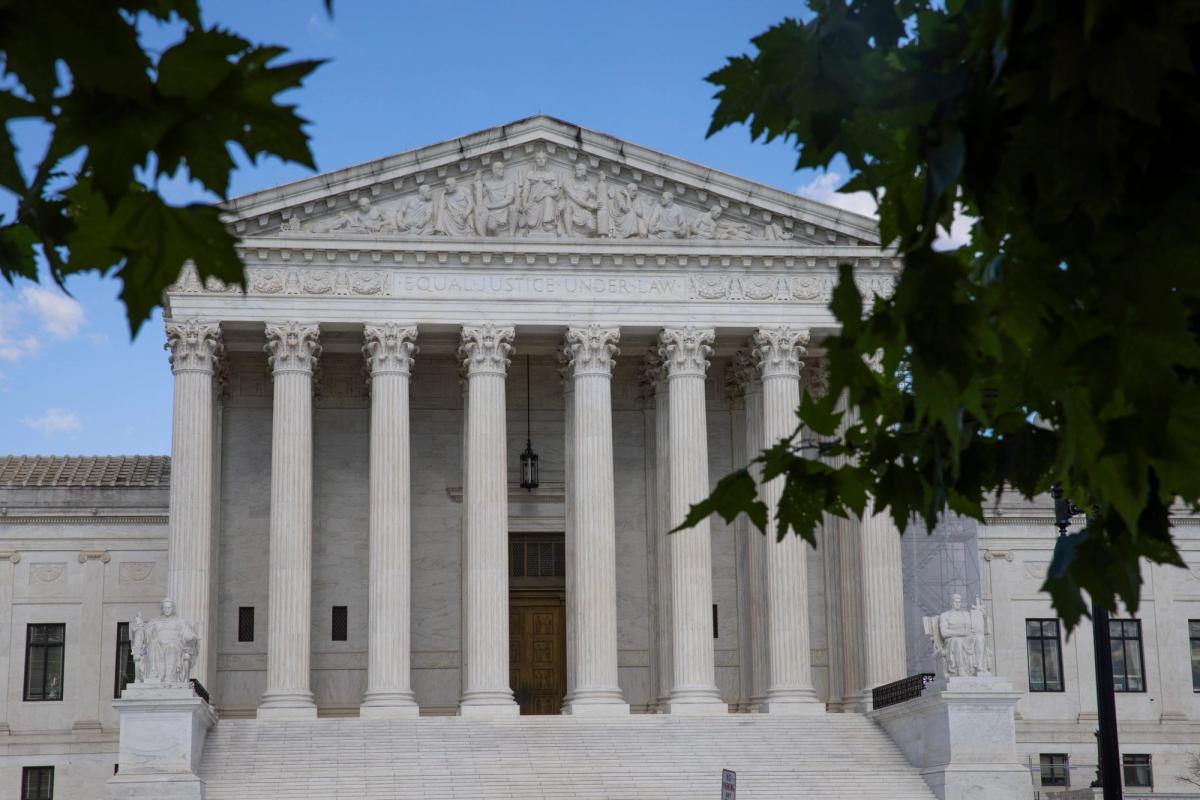
The Supreme Court declined to hear a case brought by NBA Hall of Famer John Stockton challenging COVID-19 vaccine mandates. Stockton had petitioned the Court to review his legal challenge to vaccine requirements, but the justices issued no opinion and provided no explanation for the rejection. The petition was denied without recorded dissent, meaning at least four justices did not vote to grant the case.
Stockton's lawsuit centered on his opposition to COVID-19 vaccination mandates that affected both employment and public activities. His legal team argued that the mandates violated constitutional protections and individual liberty interests. The case failed to gain traction in lower courts before reaching the Supreme Court's docket.
The Court's refusal to hear the case leaves intact the lower court decisions upholding vaccine mandate authority. Federal and state governments retain the power to implement vaccine requirements under established public health law, particularly the precedent set in Jacobson v. Massachusetts (1905), which upheld compulsory smallpox vaccination as a valid exercise of state police power.
This denial reflects the Court's general reluctance to revisit pandemic-era public health measures. Since the emergency phase of COVID-19 concluded, few vaccine mandate challenges have succeeded in court. The justices have consistently declined to hear similar petitions, signaling that this area of law remains settled.
Stockton's case joins dozens of other vaccine mandate challenges rejected by the Supreme Court. Lower courts have uniformly upheld employer vaccine requirements and government health directives under established constitutional doctrine. The denial effectively forecloses a Supreme Court reconsideration of vaccine mandate legality during a period when most mandates have already expired or been relaxed.
WHY IT MATTERS: The Court's decision preserves government and employer authority to impose vaccine mandates during future public health emergencies, preventing legal uncertainty that could complicate pandemic response protocols.